 Back to home ↖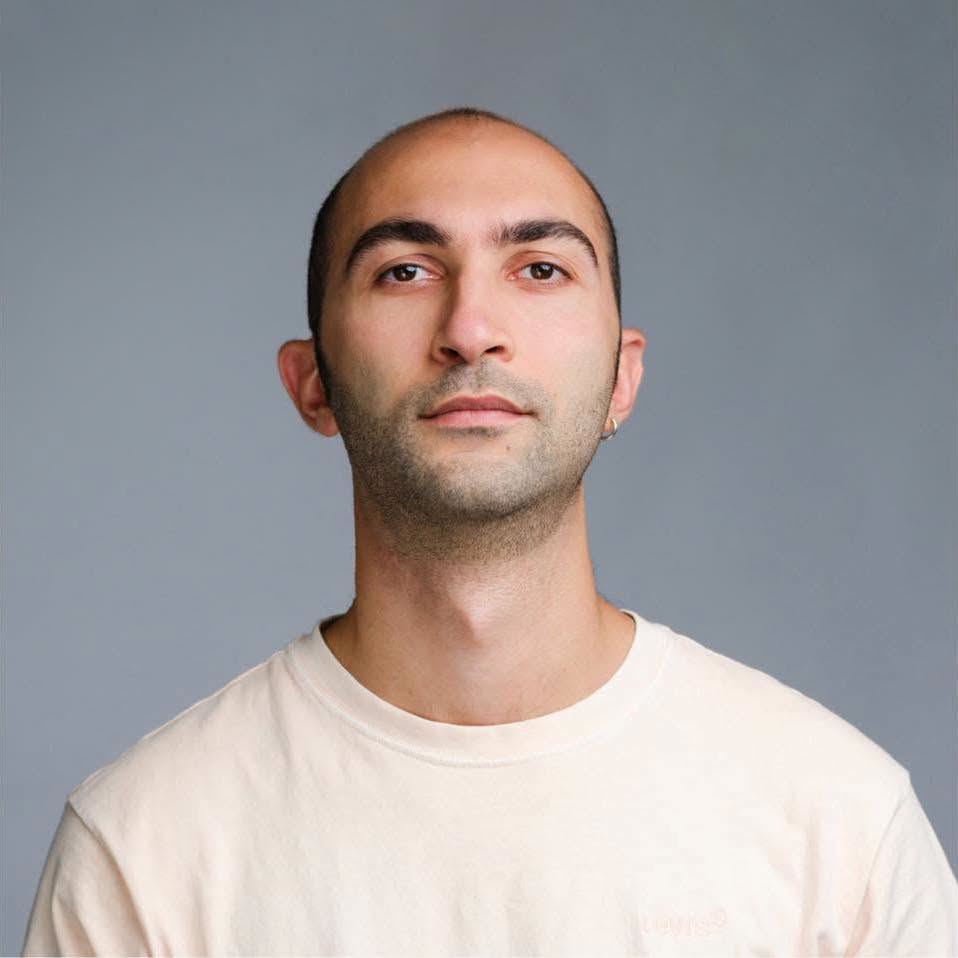
Shua means “middle” in Georgian—a place where creativity meets science. It was created by Davit Jintcharadze. Davit believes that gut feelings are a driving force in how humans make sense of the world and influence every area of life—be it politics, business, or personal choices. This belief led him to study neuroscience and psychology at New York University, followed by psychotherapy training at the University of Cambridge.
Being driven by gut feelings does not have to mean being in the dark. Neuroscience-informed branding is about being evidence-based and systematic without ignoring emotions. Only brands that understand both rationality and feelings can make a lasting impression on their customers. Both are at the foundation of how Shua works.
Davit has worked across startups, politics, and academia. He began as a psychology researcher at the Center for Brain & Health at NYU Abu Dhabi, where he published a peer-reviewed paper on first impressions and perceived competence. He then moved to London, where he worked in strategy at different startups and nonprofits. After leaving the business space, Davit developed branding and strategy for civic campaigns in the Republic of Georgia.
In 2026, he completed a fellowship in political technology at Newspeak House in London, where he focused on the use of technology in political and civic spaces.
After training in branding strategy and theory, Davit now works on neuroscience-informed branding - or neurobranding - to support businesses and nonprofits in the UK, Georgia, and globally.
LinkedIn profile ↗Selected projects
Selected work connecting research, culture, technology, and public purpose.
Uniting 50 Wineries
Partnered with 50 wineries across Georgia to manage sales of some of the country's most distinctive wines for charity.
Digital Independence Museum of Georgia
Created a digital museum where Georgians can converse with historical figures about the country's history, traditions, and future.
Academic Research
Published peer-reviewed research on first impressions, perceived competence, and masculinity in politics.